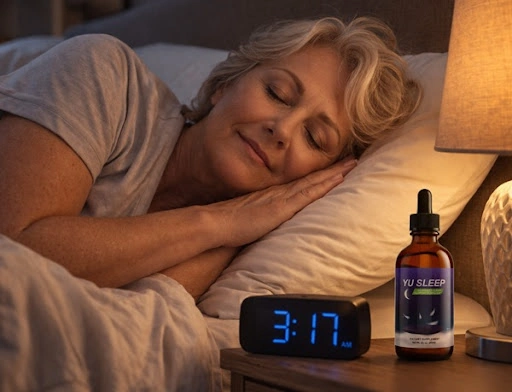
Melatonin dosing is one of the more counterintuitive corners of the supplement world. The assumption that "more melatonin equals more sleepiness equals better sleep" doesn't hold up cleanly against the available research, and understanding why is useful before choosing between a high-dose product and a lower-dose formula.
Your Body's Own Baseline
Under normal conditions, the pineal gland produces roughly 0.1 to 0.3mg of melatonin per night — a genuinely small amount. Commercial supplements routinely exceed that natural baseline by 10 to 50 times, with popular gummies and pills at 3mg, 5mg, or even 10mg per serving. That gap between physiological and supplemental doses is the starting point for understanding why "low-dose" formulas exist at all.
The Dose-Response Question
In pharmacology, a dose-response relationship describes how effect scales with dose — and it's not always linear, or even positive past a certain point. For melatonin specifically, several researchers have noted that its primary role is signaling circadian timing rather than acting as a classic sedative-hypnotic. Some analyses have suggested that once a threshold dose is reached, additional melatonin does not proportionally improve sleep onset time, and may simply extend how long the compound remains active in the bloodstream — which is one proposed explanation for next-morning grogginess at higher doses.
Why Higher Doses Correlate With Grogginess
Melatonin has a relatively short half-life, typically 40-60 minutes, but higher doses take proportionally longer to clear from the body. A 10mg dose can leave measurably more melatonin circulating by early morning than a sub-1mg dose, which is one plausible mechanism behind the "melatonin hangover" some users report — a lingering grogginess or grogginess-adjacent feeling upon waking. This isn't universal, and individual metabolism varies significantly, but it's a commonly cited trade-off of high-dose formulas.
Why Age Changes the Calculation
Natural melatonin production tends to decline with age, which is sometimes used to argue for higher supplemental doses in older adults. But metabolic clearance also tends to slow with age, meaning a given dose may remain active in the body longer in a 60-year-old than in a 25-year-old. This combination — lower natural production but slower clearance of supplemental doses — is part of why some clinicians and formulators favor a lower, steadier dose for older adults rather than defaulting to the highest available option.
The Case for a Lower-Dose, Multi-Ingredient Approach
A formula like YuSleep's — 0.9mg of melatonin paired with B-vitamins and a botanical blend — represents a different bet: rather than asking one ingredient at a high dose to do all the work, it distributes support across several mechanisms. B-vitamins support the body's own melatonin production pathway. GABA and L-theanine are included for their association with reduced neural excitability and calm, relaxed states. Magnesium and lemon balm are included for general relaxation support. Tart cherry concentrate contributes a food-based, naturally-occurring source of melatonin on top of the supplemental dose.
The honest trade-off: this approach is less likely to produce an immediate, forceful sedative effect on night one, and more likely to show its effect gradually, as a cumulative pattern over consistent nightly use.
A Practical Way to Decide
If a high-dose product has worked well for you without grogginess or other side effects, there's not necessarily a strong reason to switch. But if you've noticed morning fog, vivid or unusual dreams, or a "hungover" feeling after taking a higher-dose melatonin product, a lower-dose, multi-ingredient formula is a reasonable alternative worth testing over a few consistent weeks — with the expectation that it works more gradually. As always, persistent or severe sleep problems warrant a conversation with a doctor rather than further supplement experimentation.
The Open Question of Tolerance
A frequently-asked but not fully-resolved question is whether nightly melatonin use — at any dose — leads to reduced responsiveness over time, sometimes referred to as tolerance. The research base here is smaller and more mixed than the dose-response literature discussed above. Some studies of long-term melatonin users haven't found strong evidence of tolerance developing, while anecdotal reports vary considerably. This uncertainty is part of the reasoning some formulators cite for starting with a lower baseline dose: it preserves more room to adjust if responsiveness does change over months or years of use, compared to starting at the higher end of the available range.
Why Dose Timing Is a Variable Too
Dose size isn't the only variable that matters — timing relative to your natural circadian rhythm affects how melatonin behaves. This is well-established in jet lag research, where the timing of a dose relative to the destination time zone determines whether it shifts your body clock earlier or later. For general nightly sleep support, most guidance points to a consistent time each night, roughly 30-60 minutes before your intended bedtime, as more reliable than variable dosing timed to how tired you happen to feel that night.
Putting Dose in Context With Everything Else
It's worth stepping back to note that melatonin dose is one variable among several that affect sleep quality — light exposure, caffeine timing, and sleep schedule consistency often have a larger cumulative impact than the specific supplement dose chosen. The most evidence-supported approach for most people combines consistent sleep hygiene fundamentals with whichever melatonin strategy (higher dose, lower dose, or none) best matches their individual history with side effects and their tolerance for a more gradual, cumulative effect versus an immediate one.
Genetic Factors in Melatonin Metabolism
Research into pharmacogenomics — how genetics affect drug and supplement metabolism — has identified variations in the CYP1A2 enzyme, which plays a role in melatonin clearance, that differ between individuals. Some people metabolize melatonin considerably faster or slower than others based on these genetic differences, which is one biological explanation for why the same dose can produce a strong effect in one person and almost none in another. This is a developing area of research rather than a settled one, but it reinforces the broader point that dosing in this category is inherently more individualized than a single "correct" number.
A Regulatory Note
In the United States, melatonin is regulated as a dietary supplement rather than a drug, meaning it does not go through the FDA approval process required for prescription or over-the-counter medications. This regulatory category affects how products can be marketed and what claims they can legally make, but it does not by itself indicate anything about a specific product's safety or effectiveness — those are separate questions best evaluated through the label transparency and research-alignment criteria discussed throughout this piece.
Combination Formulas: A Category-Wide Trend
YuSleep's approach — a lower melatonin dose paired with a broader supporting blend — reflects a wider trend across the sleep-supplement category toward multi-ingredient formulas rather than single-compound products. The underlying rationale is that sleep involves multiple physiological systems (hormonal, neurological, behavioral), so a formula addressing several pathways at once may produce a more rounded effect than maximizing any single ingredient. The trade-off, consistent with points made earlier in this piece, is reduced ability to isolate which specific ingredient drives any observed effect.
A Simple Decision Framework
Bringing the data points in this article together into a usable framework: if you've had good results with high-dose melatonin and no side effects, there's limited reason to switch. If you've experienced grogginess or vivid dreams, a lower-dose, multi-ingredient approach is a reasonable next experiment. And regardless of which you choose, pairing it with consistent sleep hygiene fundamentals — timing, light exposure, caffeine cutoff — will likely have a larger combined effect than dose selection alone.