Supplement labels rarely reward a careful reading — but occasionally it's worth doing anyway, especially for something you're taking every night for months. This is a straightforward, data-first walkthrough of what's actually printed on the YuSleep supplement facts panel, without the marketing language layered on top.
How the Label Is Structured
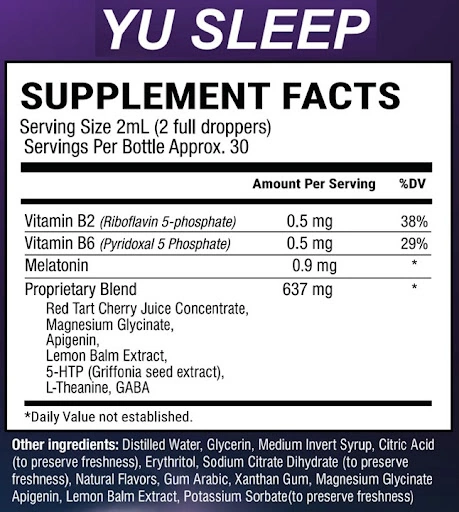
The label separates ingredients into two categories: three individually-dosed actives (Vitamin B2, Vitamin B6, and Melatonin), and a single 637mg "Proprietary Blend" containing seven additional ingredients listed by descending weight, without individual amounts. This two-tier structure is extremely common across the sleep-supplement category, and understanding it is the first step to reading any label like this one critically.
The Three Individually-Dosed Actives
Vitamin B2 (Riboflavin 5-Phosphate) — 0.5mg (38% DV). An active, bioavailable form of riboflavin. B2 participates in cellular energy metabolism and general nervous system function. It's a supporting nutrient here, not a sleep-inducing ingredient on its own.
Vitamin B6 (Pyridoxal 5-Phosphate) — 0.5mg (29% DV). An active form of B6, involved as a cofactor in the synthesis of several neurotransmitters, including serotonin — a precursor in the body's own melatonin production pathway. Including B6 alongside supplemental melatonin is a common formulation choice intended to support that internal pathway, not just deliver melatonin directly.
Melatonin — 0.9mg. The formula's central dose, and its most distinctive data point. For context: research studying melatonin for sleep commonly uses doses ranging from 0.5mg up to 10mg, with some evidence suggesting that doses at the lower end of that range are sufficient to influence circadian timing without necessarily improving further at higher doses. At 0.9mg, YuSleep sits close to the lower end of that published range, well below what's found in many 3-10mg commercial products.
The 637mg Blend: Seven Components
Listed in order as they appear on the label:
- Red Tart Cherry Juice Concentrate — studied in small trials for its association with modestly increased sleep duration and reduced insomnia severity in older adults, likely related to its natural melatonin and tryptophan content.
- Magnesium Glycinate — a chelated, highly bioavailable magnesium form. Magnesium deficiency has been associated with poorer sleep quality in observational data, and glycinate is generally well-tolerated at the digestive level compared to other magnesium salts.
- Apigenin — a flavonoid concentrated in chamomile flowers, one of the most-studied traditional calming botanicals, though clinical evidence in humans remains limited relative to its widespread traditional use.
- Lemon Balm Extract — frequently studied in combination formulas (often with valerian) rather than in isolation, making its independent contribution harder to quantify.
- 5-HTP (from Griffonia Seed Extract) — research doses for 5-HTP alone commonly range from 100-300mg; because it shares a 637mg total blend weight with six other ingredients, it's reasonable to assume the actual 5-HTP content here is meaningfully below that independent research range.
- L-Theanine — commonly studied at 200mg as an individual dose for relaxation effects; again, likely present at a smaller fraction of that within this shared blend.
- GABA — oral GABA doses in sleep research often range from 100-300mg; its blood-brain barrier permeability remains a subject of ongoing scientific debate, meaning oral GABA's mechanism of action is less firmly established than melatonin's.
The Transparency Gap in Proprietary Blends
To be direct about the limitation here: a combined 637mg total split across seven ingredients means several of them are almost certainly present in amounts below the doses used in single-ingredient research studies. This isn't a flaw unique to YuSleep — it's standard across most blended sleep formulas — but it does mean you're trusting the formulation's overall design more than any single ingredient's clinically-studied dose. If per-ingredient dosing precision is a priority for you, that's a legitimate reason to look for products that disclose individual milligram amounts for every ingredient, not just the top three.
The Inactive Ingredient Data
The formula's inactive ingredient list — distilled water, glycerin, medium invert syrup, citric acid, erythritol, sodium citrate dihydrate, natural flavors, gum arabic, xanthan gum, and potassium sorbate — serves the liquid delivery format rather than the sleep-support mechanism. Glycerin and gum arabic contribute texture; citric acid and sodium citrate stabilize pH for shelf life; erythritol, a sugar alcohol, adds mild sweetness without a meaningful glycemic impact; potassium sorbate is a common, food-safe preservative. None of these are unusual for a liquid supplement, but anyone with a specific sensitivity — sugar alcohols in particular — should review this list before purchase.
Benchmarking Against Published Research Doses
For readers who want the numbers side by side, here's how the individually-dosed actives compare to commonly cited research ranges:
- Melatonin: YuSleep uses 0.9mg. Published studies on melatonin for sleep have used doses from roughly 0.5mg to 10mg, with some analyses suggesting the lower end of that range is sufficient for circadian effects.
- Vitamin B6: YuSleep uses 0.5mg (29% DV). This is within standard multivitamin ranges and well below levels associated with any known toxicity risk.
- Vitamin B2: YuSleep uses 0.5mg (38% DV). Also within typical dietary supplementation ranges.
- L-theanine (within blend): Individual research on L-theanine alone commonly uses 200mg doses; the blend total (637mg across seven ingredients) makes it unlikely this ingredient alone reaches that amount.
- GABA (within blend): Research doses for oral GABA supplementation are often 100-300mg; the same blend-dilution caveat applies here.
This kind of side-by-side comparison is the most useful exercise for evaluating any blended supplement, not just this one — it tells you where a formula is likely operating at or near clinically-studied levels (as it does with melatonin) versus where it's more likely providing a smaller, supporting-role amount (as is probable for several blend components).
Manufacturing and Quality Notes
Beyond the formula itself, the product is described as manufactured in the United States under Good Manufacturing Practice guidelines. GMP certification relates to consistency, sanitation, and quality control in the manufacturing process — it doesn't independently verify the effectiveness of the formula, but it is a meaningful baseline signal of production quality that's worth checking for in any supplement purchase.
Response Variation Across Users
Melatonin response varies substantially between individuals, driven by factors including genetic differences in melatonin receptor sensitivity, body weight, metabolism speed, and age. This variability is well-documented in melatonin pharmacology research and explains why dosing recommendations in this category tend to span a range rather than converge on one universal number. It also means that a formula's fit for any specific person can only really be assessed through actual use, not through label analysis alone, however thorough that analysis is.
Storage Considerations for Liquid Formulas
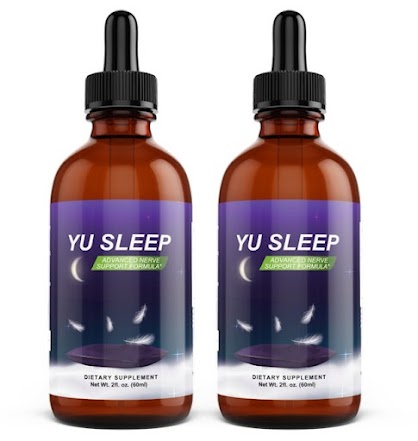
Liquid supplements in amber glass, like this one, benefit from the glass's UV-blocking properties, which help protect light-sensitive compounds such as melatonin and the botanical extracts from degradation. Storing the bottle in a cool, dark location — rather than a sunlit windowsill or a hot car — helps preserve potency through the roughly 30-day usable window of an opened bottle.
What This Means for You
The formula's logic is coherent even with the transparency caveat: a modest, well-positioned melatonin dose, supporting B-vitamins, and a blend of ingredients each individually associated (to varying degrees of evidence strength) with calm and sleep support. Whether the sum is greater than its parts is something that plays out over weeks of actual use, not something a label alone can promise.